

 If you manage a commercial property in Pittsburgh, you already know pavement takes a beating here. Between freeze-thaw cycles, heavy truck traffic, and long winters that stretch from the Strip District to Cranberry Township, shortcuts show up fast.
The right materials and methods are what separate pavement that holds up from pavement that turns into a liability.
Below, we break down how professional paving companies approach commercial work in Western Pennsylvania and what that means for your site.
Key Takeaways
- Commercial paving performance in Pittsburgh depends on using materials designed for heavy loads and freeze-thaw cycles.
- A properly built aggregate base is just as important as the asphalt surface.
- Evaluating traffic, drainage, and phasing helps choose the right paving method.
- Professional methods reduce long-term costs, downtime, and compliance risk.
Essential Paving Materials and What They’re Used For
Professional paving starts with the right materials, selected for traffic load, drainage, and Pittsburgh’s climate. Here’s a quick overview of the core materials we rely on for commercial projects across Allegheny County and surrounding areas.
Hot Mix Asphalt for Surface and Base Layers
Hot mix asphalt is the primary material used for commercial drive lanes, parking lots, and access roads throughout Pittsburgh’s office parks and retail centers. It combines aggregates and asphalt binder designed to handle heavy vehicle loads while remaining flexible during temperature swings.
In areas like the North Shore or along Route 28, this flexibility matters because freeze-thaw cycles can crack weaker mixes. Properly specified hot mix asphalt provides a durable wearing surface and, when placed in multiple lifts, forms a stable base that supports daily commercial traffic.
Aggregate Base for Structural Support
Aggregate base sits beneath the asphalt and does most of the structural work. Crushed stone is compacted to create a stable platform that distributes loads and prevents settlement, which is especially important on older industrial sites common in Pittsburgh, where soil conditions vary.
Near river corridors like the Allegheny or Monongahela, proper base depth and compaction help manage moisture and reduce frost heave. Without a well-built aggregate base, even the best asphalt surface will fail early.
Tack Coat and Prime Coat for Layer Bonding
Tack coat and prime coat are liquid asphalt products used to bond layers together. Prime coat penetrates untreated aggregate bases, while tack coat ensures new asphalt adheres to existing pavement.
These materials are critical for phased commercial projects, such as warehouse expansions in the South Hills, where paving may happen in stages. Strong bonding reduces slippage and delamination, common failure points in high-turnover areas like loading docks.
Sealcoating and Pavement Marking Materials
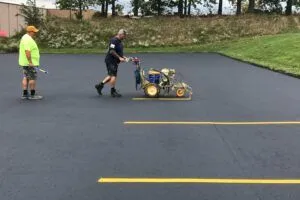
Sealcoating materials protect finished asphalt from water intrusion, oil spills, and UV damage, extending service life in Pittsburgh’s wet climate. Pavement marking paints and thermoplastics are used to restore striping for ADA compliance, fire lanes, and traffic flow.
In busy retail corridors like McKnight Road, clear markings improve safety and reduce liability. These finishing materials don’t add structure, but they play a major role in asset preservation and code compliance.
How to Evaluate Paving Methods and Choose the Right Approach for Your Pittsburgh Property
Materials matter, but methods determine how well those materials perform over time. Evaluating paving approaches helps commercial owners make informed decisions that align with budgets, schedules, and compliance requirements.
Assess Traffic Loads and Daily Use
Start by evaluating how your pavement is actually used. A medical office in Oakland with constant passenger vehicles requires a different approach than a distribution facility near I-79 handling tractor-trailers.
Load ratings influence asphalt thickness, base depth, and mix design. In Pittsburgh, underbuilding pavement for heavy use often leads to premature rutting within a few winters, increasing long-term costs.
Consider Drainage and Site Conditions
Water is pavement’s biggest enemy, especially with Pittsburgh’s annual rainfall and snowmelt. Evaluating drainage includes looking at slope, catch basins, and subsurface conditions common on older commercial parcels.
Poor drainage in flat parking lots, like those found in older shopping centers, accelerates base failure. Choosing methods that address grading and water management up front helps prevent ongoing repairs.
Match Methods to Phasing and Business Continuity
Many commercial properties can’t shut down completely for paving. Evaluating methods includes planning phased construction, off-hours work, and temporary access routes.
In dense areas such as Downtown Pittsburgh or the Strip District, coordination with tenants and delivery schedules is critical.
Milling and overlay methods may be appropriate when downtime must be minimized, while full-depth reconstruction is better suited for properties with flexibility.
Verify Compliance and Inspection Readiness
Professional paving methods account for local permitting, ADA requirements, and inspection expectations. In Pittsburgh, projects may need coordination with the Department of Permits, Licenses, and Inspections, especially when modifying access points or drainage. Evaluating a contractor’s process for documentation, testing, and closeout ensures your pavement meets code and is ready for audits or property transfers.
Schedule a Commercial Paving Evaluation in Pittsburgh
If you’re responsible for a commercial property, guessing on materials or methods can get expensive fast.
At M&D Paving and Sealcoating Inc., we help property managers, facility directors, and owners across Pittsburgh evaluate pavement conditions, select the right materials, and plan work that aligns with operations and compliance.
Contact us to schedule a site walkthrough and get a clear, documented paving plan built for your property and Pittsburgh’s conditions.
FAQs
How do we know if our commercial lot needs full reconstruction or just an overlay?
Determining the right approach starts with evaluating base conditions, drainage, and failure patterns like alligator cracking. Core samples and visual inspections help us identify whether issues are structural or surface-level. In Pittsburgh, repeated freeze-thaw damage often signals base problems that overlays alone won’t fix.
What kind of disruption should our tenants expect during paving work?
Disruption depends on project scope and phasing strategy. Many commercial projects in Pittsburgh are completed in sections to maintain access and parking. Clear scheduling, signage, and coordination help keep tenants operational throughout the process.
How long does commercial asphalt typically last in this region?
With proper materials and maintenance, commercial asphalt in Western Pennsylvania can last 15 to 25 years. Sealcoating, crack filling, and timely repairs play a big role in extending service life, especially with heavy traffic and winter weather.
Are there specific regulations we need to plan for on our property?
Commercial paving often involves ADA compliance, stormwater considerations, and local permitting. Coordination with the City of Pittsburgh and, in some cases, PennDOT is part of the process when access points or public right-of-way are affected.


